The 5 Best Dog Training Apps of 2026, Ranked for Owners Who Are Short on Time
Leash pulling, jumping, nipping, ignoring “come.” We compared the most popular training apps on the one thing that decides whether any of them work: will you actually keep doing it every day?
TPBy the The Trained Pup Editors · November 2, 2026 · 8 min read
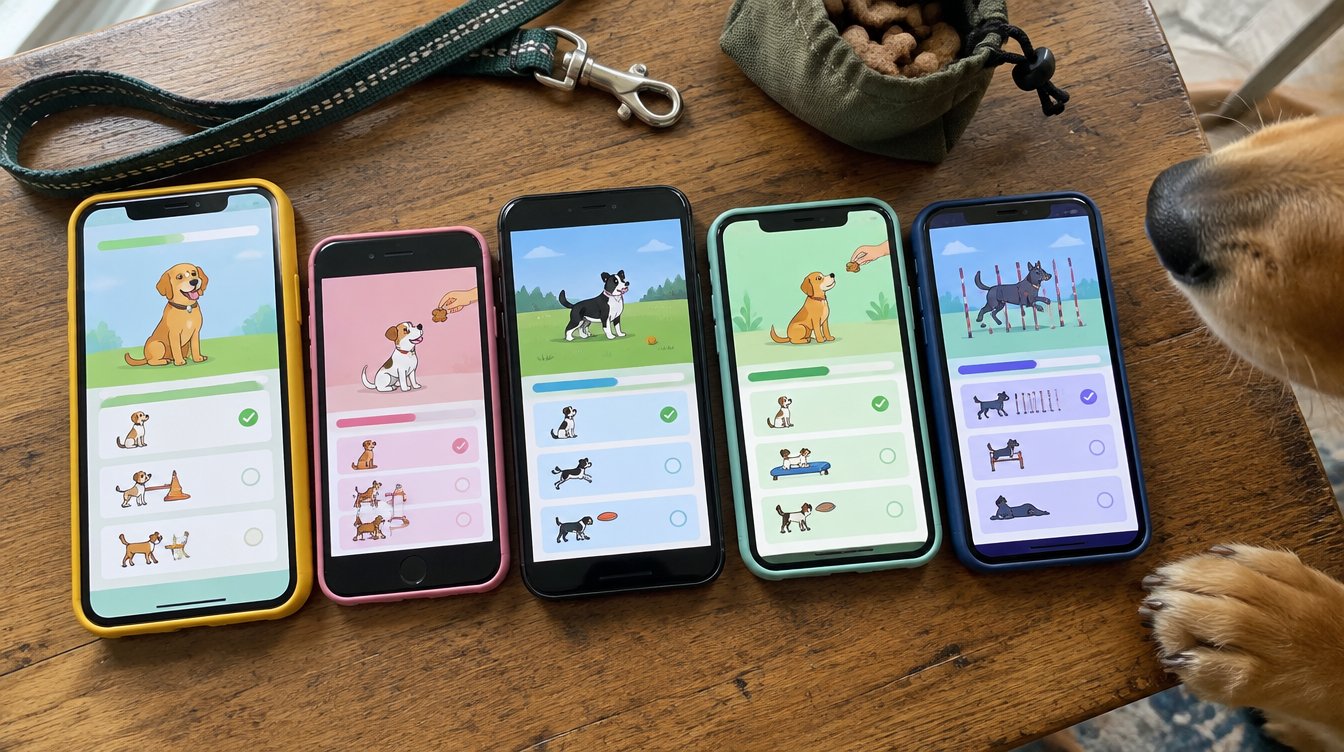
Five apps, five very different ideas of what “training” should look like.
Every dog training app promises a calmer, better-behaved dog. Most of them use the same kind, reward-based methods, and most cover the same core skills. What separates them is format: how long a session takes, how personal the plan is, and whether the app gives you a reason to come back tomorrow. We lined up five of the most-used options for new and existing dog owners. One clearly fit real life better than the rest.
How we compared them
We compared each app on the things owners actually live with: whether it sticks to reward-based methods (no punishment or aversive tools), how well the plan adapts to your dog’s age and specific problems, how clear each lesson is, how long a typical session takes, what support is available when you get stuck, and how easy it is to start. We looked at each app’s onboarding, lesson format, published curriculum and owner feedback, and we were realistic about limits: no app replaces a certified professional for aggression or serious anxiety.
The criterion we weighted most heavily: daily consistency. Dogs learn best in short, happy, frequent sessions, and the number one reason app-based training fails is that owners stop showing up after week one. So we gave the most weight to apps that keep sessions short (around five minutes), build the plan around your dog’s biggest problems first, and give you a genuine reason to come back the next day.
#1 Best Overall
1
Scott & Maple
Best overall · Best for building a daily habit
Scott & Maple starts with a one-minute quiz about your dog’s name, age, size and the behaviors driving you up the wall, then builds a 28-day plan of five-minute lessons that tackles your biggest problems first, whether that’s leash pulling, jumping on guests, barking, puppy biting, recall or potty training. Each lesson gives clear steps, a session timer and the “why” behind the exercise, and one new lesson unlocks per day so you never face a wall of content.
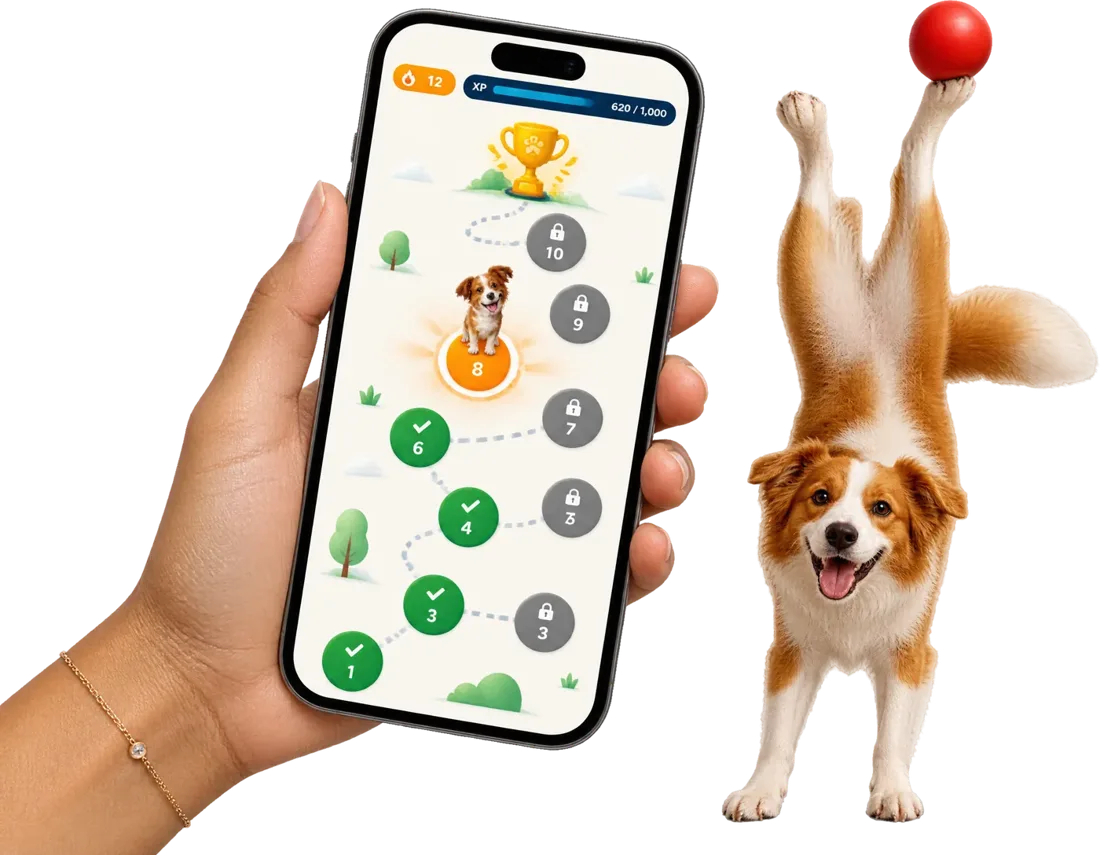
Why it wins: it is built around exactly what we weighted most. A guide character, Coach Maple, cheers you through each session, while streaks, XP, skill stars (sit, stay, come and loose-leash walking go from one star to three) and a weekly recap make five minutes a day feel like a game you don’t want to break. Methods are strictly reward-based: treats, praise and play, never punishment. It also runs in your phone’s browser, so there is nothing to download and you sign in with a one-tap email link.
Pros
Personalized 28-day plan built around your dog’s top problems
Truly short five-minute daily lessons with a built-in timer
Streaks, badges and weekly recaps that make consistency easy
Kind, reward-based methods only
No app download; works in any phone browser
30-day refund guarantee and one-click cancel
Cons
Newer than the big names, with a smaller library of advanced tricks
No live one-on-one trainer sessions
Not designed for aggression or severe anxiety (it says so plainly)
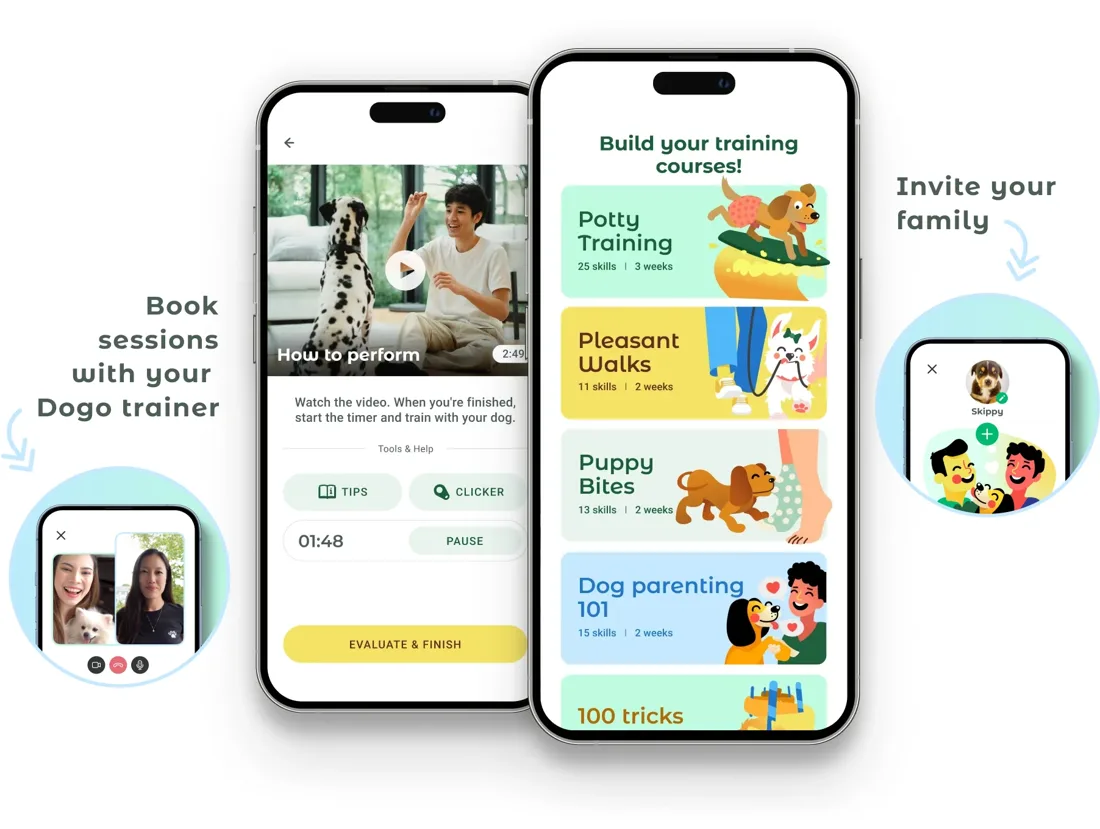
Dogo is one of the most established apps in the category, with structured courses for new dogs, biting, potty training, basic obedience and impulse control, plus a library of 100+ tricks. A built-in clicker and whistle are handy, and you can submit videos for feedback from trainers. It’s a strong all-rounder; the trade-off is that the breadth can make it easier to drift between courses than to stick to one daily routine.
Pros
Huge trick library and structured courses
Built-in clicker and whistle tools
Video feedback from trainers
Cons
So much content it can be hard to stay focused
Some lessons feel brief
Native app download required
3
Woofz
Best for training plus wellness tracking
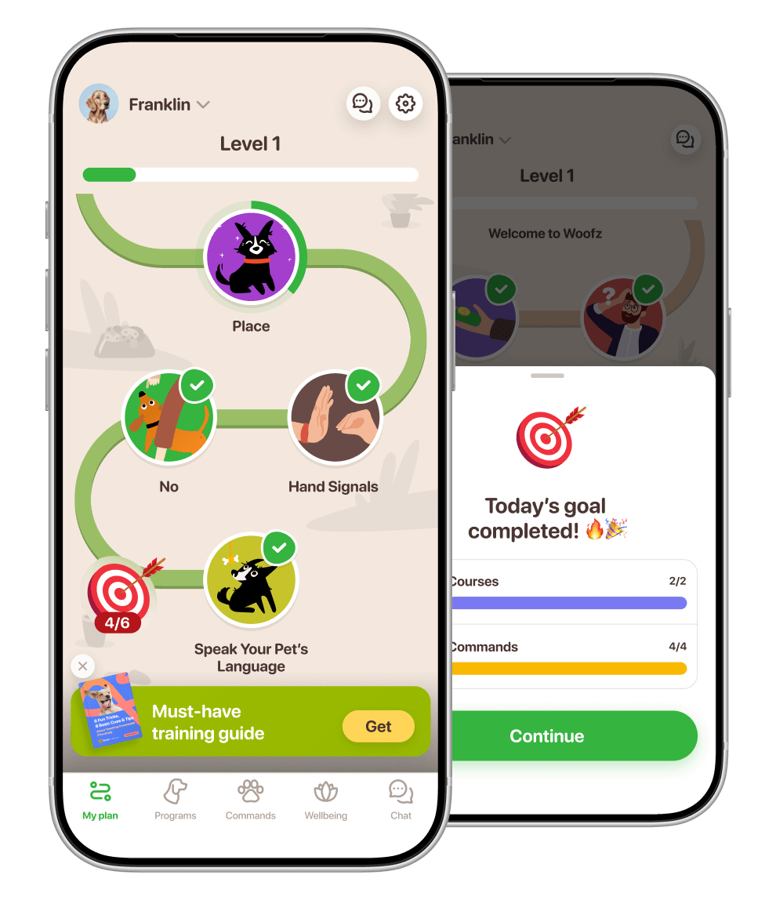
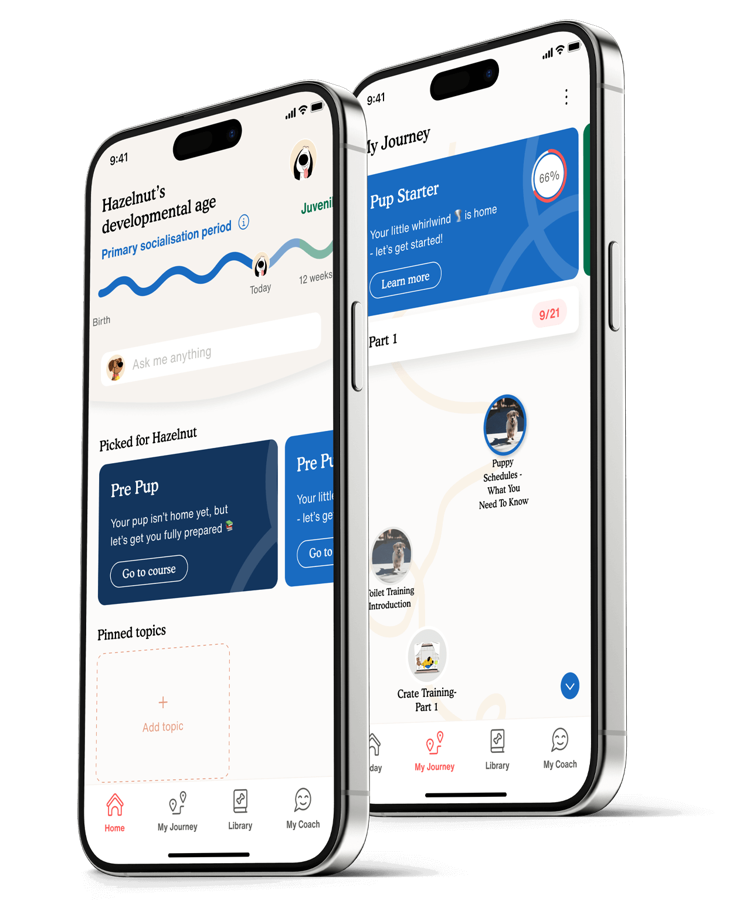
Woofz pairs a customized training plan and 150+ video lessons with a broader dog-care toolkit: a wellness score, activity and walk tracking, nutrition stats, reminders and a 24/7 AI dog assistant. If you want one app for training and day-to-day care, it covers a lot of ground. Lessons run longer than our winner’s (roughly 10–15 minutes), and the extra features can pull attention away from the training itself.
Pros
Training plus health, walk and routine tracking
Multiple dog profiles and family sharing
Large lesson library with video
Cons
Longer sessions are harder to keep up daily
Feature-heavy; training can get lost in the mix
Independent reviewers question how clearly expert involvement is shown
4
Zigzag
Best for brand-new puppies
Zigzag focuses squarely on puppyhood, with lessons tailored to breed and age and strong coverage of socialization, biting, fear periods and confidence. Its program is led by certified behaviorists, and premium members get access to an experts line. If you have a puppy under six months, it’s an excellent fit; if your dog is past adolescence and you mainly want to fix leash pulling or jumping, its puppy-first design is less relevant.
Pros
Deep puppy-development curriculum
Program led by certified behaviorists
Expert support for premium members
Cons
Built for puppies; less suited to adult dogs
Several lessons a day can feel like a lot
Native app download required
5
Pupford
Best for video-first foundations
Pupford is best known for Zak George’s 30 Day Perfect Pup video course, a well-loved introduction to sit, stay, leave it, crate training and leash walking, with a private community for questions. Extra Academy courses cover recall, barking, separation anxiety and more. It’s a solid foundation, but personalization is limited, the app doubles as a treat and chew store, and owners report occasional video and notification glitches.
Pros
Popular Zak George video course
Supportive private owner community
Add-on courses for specific problems
Cons
Limited personalization to your dog
App is also a shop, which can distract
Reported video loading and notification issues
The bottom line
Any of these apps can help, and all five use kind, reward-based training. Dogo is the pick for trick lovers, Woofz for owners who want care tracking too, Zigzag for brand-new puppies and Pupford for a video-first foundation. But if the real problem is finding the time and staying consistent, which for most owners it is, Scott & Maple is the one we’d start with: a plan built around your dog’s actual problems, five minutes a day, and a streak you won’t want to break.